The Melodramatic Rise of Cooperative Learning in Digital Wellness
the image is generated by ai
Trying to connect learning theories to an actual design felt pretty abstract until we started building our blueprint. For EDCI 335, my pod decided to focus on the Psychology of Social Media and Developing Healthier Digital Habits. While our pod collaborated to outline the broader curriculum, we are independently evaluating different instructional strategies on our individual blogs. For my post, I chose to dive deep into cooperative learning to see how its characteristics align, or fail to align, with our proposed design plan.
There is a big difference between real cooperative learning and just throwing students into a random group project. It’s built on a few main things like positive interdependence (basically, the group wins or loses together), individual accountability, and promotive interaction. Instead of just sitting back and reading a screen, students have to talk, debate, and change how they think by working together.
Looking at our blueprint, this strategy works perfectly for Subtopic 3 (Mental Health Outcomes). We planned a Case Study Analysis where small groups look at different social media habits, like comparing a heavy passive scroller to someone dealing with cyberbullying. A cooperative approach makes total sense here. If we give each student a specific role to look at, it creates a “jigsaw” setup where everyone has to contribute their piece to understand the whole case. The Highlight Reel Investigation in Subtopic 2 also benefits from this, since it’s much easier to call out fake or curated online profiles when you’re talking through it with peers.
However, cooperative learning doesn’t fit everything we are teaching. Fixing digital habits is a really personal thing. Activities like our Notifications Challenge (turning off alerts for 24 hours) or the Personal Digital Well-Being Action Plan in Subtopic 4 are individual experiments. Forcing students to do group work for their personal screen-time journals would just feel awkward and forced.
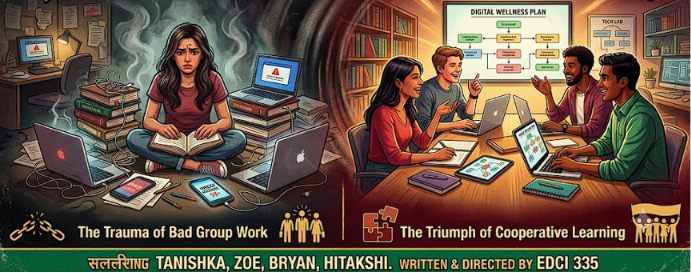
Because of that, cooperative learning will have a specific place in our WordPress site, but it won’t be the only method we use. Since tech tools aren’t neutral, just using a basic discussion board where students “post once and reply to two people” completely ruins the point of cooperative learning. It just becomes a box-checking exercise. To make our case studies work online, we need to embed interactive tools like shared H5P elements or collaborative workspaces.
Ultimately, cooperative learning matters for our module because it gets students talking about social media rather than just scrolling through it alone. By mixing these group case studies with individual reflections, our design uses peer support to help everyone build healthier digital lives.
special mention to my group for inspiration and help for blog.